


Accessibility in Graphic Design

Boosted Build

7 Authentic Ways Graphic Design Accessibility Can Help You Reach a Wider Audience
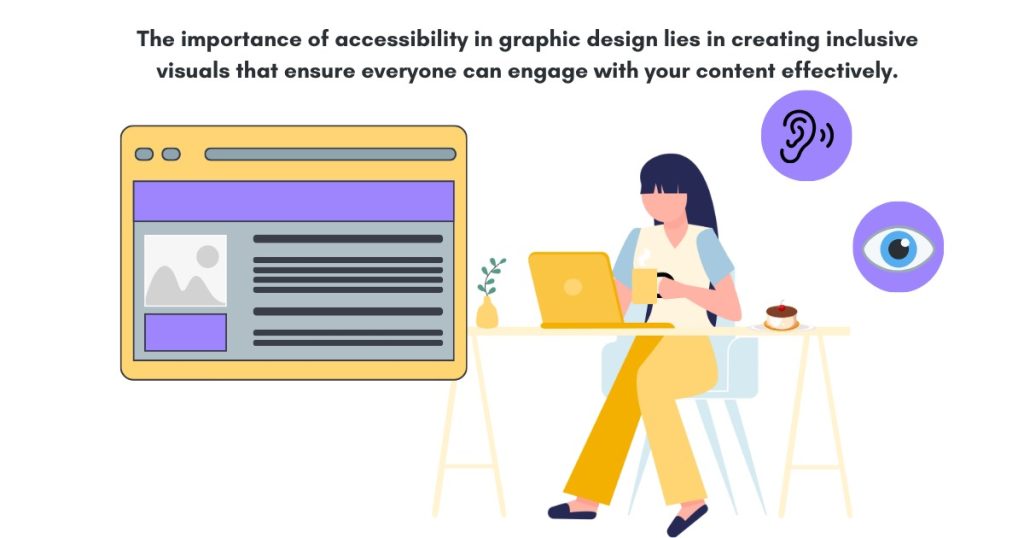
Accessibility in graphic design is a crucial principle in design today because it is no longer considered as a secondary concern in our digital world. In graphic design, accessibility means that your images are not just beautiful, they are comprehensible and usable too, regardless of one’s ability.
This blog generally covers how embracing this type of accessibility in graphic designing can grow your connections with others while getting to more people.
1. Embrace Color Contrast for Better Accessibility:
Color is an essential element in the transmission of messages and the structuring of the visual features of a web page. To enhance accessibility in graphic design, the difference between background and text colors should be sufficient. Furthermore, online apps used to assess the gift of compatibility may be of help.
Expanding Your Reach:
High-contrast colour combinations should be utilised to enhance clarity and comprehension among individuals who have visual impairments such as colour blindness..
2. Clear and Concise Text: Enhancing Accessibility
Body copy within your designs should be clear and to the point (sic); keep it brief. Use common fonts like Arial, Verdana or Tahoma and avoid overly decorated ones such as Papyrus or Lucida Handwriting which don’t fit well in a web context. Also consider making your font bigger with regards to mobile phones if you want more comfortable reading.
Catering to a Wider Audience:
Concise and clear writing assists dyslexics or visually impaired individuals ensure they comprehend what you are projecting in your pictures.
3. Meaningful Alt Text:
Alt text is an important description for images for instance used by screen reading software by the visually impaired. Therefore come up with concise and clear alt text for each and every image in your designs. Don’t just rely on generic descriptions – explain the purpose and content of the image.
Reaching New Audiences:
Meaningful alt text opens your designs to a wider audience who rely on screen readers to access information online.
4. Embrace Descriptive Titles and Headings:
It would be best if the titles and headings of your design had specific information showing them. This way, your work will not only be easy to read by the audience but also will aid search engines in understanding the content displayed on your designs.
SEO and User Experience Improvement:
For all of us versus every other aspect, descriptive titles plus headings are better for both SEO purposes (article title) as well as image headings which enhance general UX benefit than any other thing FIFA world cup trophy.
5. Simplify Your Design Layout:
Don’t use very complex structures that may be a lot for certain users.There should be neat and arranged patterns that are easy to follow and understand with a good progression of ideas across the whole page. The importance of white space in giving our eyes some air space as well as enhancing legibility cannot be overlooked.
Making all user experiences better:
By following an uncomplicated approach in creating them, your design can appeal to any user regardless of his or her cognitive ability levels such as blindness or deafness through screen reading software.
6. Keyboard Navigation:
Most users interact with visuals using a mouse, but you should consider people who navigate by means of a keyboard. You must make your design elements, such as buttons, or links, accessible via a keyboard so that users can navigate and interact with your visuals without a mouse.
Catering for Different Users:
Keyboard navigation helps people who can’t use a mouse or do not like using one thereby making it inclusive for everyone, including motor-impaired individuals.
7. Prioritise Responsive Design:
Put responsive design first, responsive design is highly important in the current mobile-first world. Ensure that you allow your visuals to adjust and display correctly in different screen sizes and devices, these being desktops, laptops, tablets and smartphones.
Getting to your audience no matter where they are. Responsive design that makes it accessible and usable from any device. Enabling you to reach them into whichever media they prefer for your content interaction.
Attracting your Audience in every Place:
Responsive design guarantees that your images are visible and comprehensible on any item, helping you get in touch with your audience in whatever platform they use for accessing your content.
Conclusion:
Accessibility does not only concern conformity, it is also concerned with taking on the chance. Making one’s design content accessible is not merely an issue of examining it with regard to meeting various standards. But it should be inclusive design while actively targeting a broad audience.
You can unleash an abundance of possibilities for connecting with customers. And developing an all-encompassing brand or business by embracing these concepts. Do you wish you could become an excellent graphic designer whose visuals cater for everyone’s needs and preferences?
Make a visit to Boosted Growth Page and you will meet a team of experienced designers. They will assist you to come up with influential yet universally acceptable designs. You can therefore reach us! The need to make design accessible to all people is brought out by showing how when whoever receives the message at the bottom acts on it (eg calling), she gets help from your agency.
The last sentence initiates conversation as well as stresses significance that accessibility holds among current design trends.