


Web Development Stack Comparison: MERN to LAMP

Boosted Build
Choosing the Right Stack: MERN vs MEAN vs LAMP
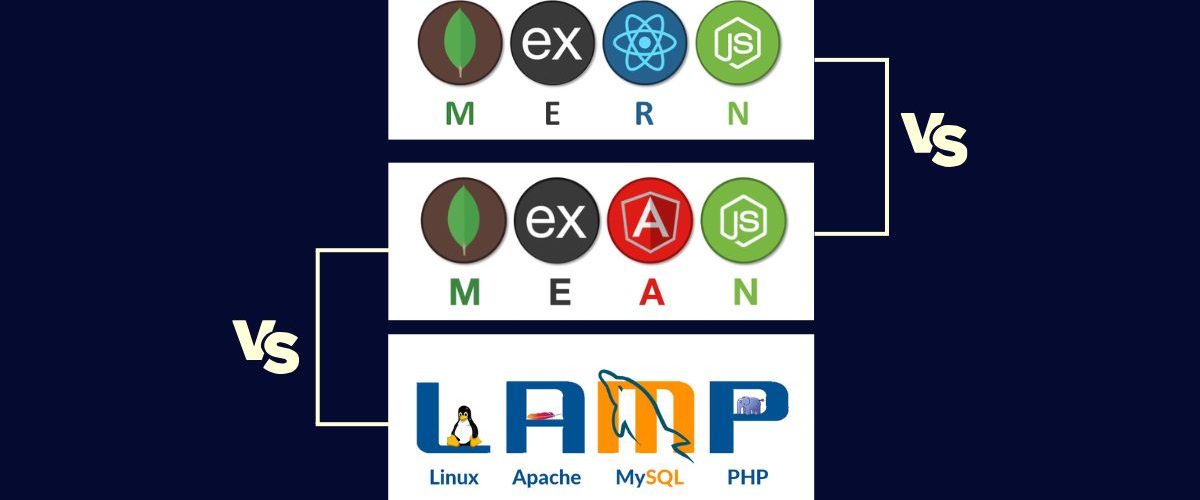
Web Development being a constantly changing field by nature, and decision for the technology stack becomes pertinent to the efficiency, scalability, and success of the project. There are many options available in stacks to choose from for the development of dynamic and highly performing web applications; among them, the widely accepted three stacks are MERN, MEAN and LAMP. And we’re goin to see Web Development Stack Comparison.
If so, what are the exact differences between them, and which should be used for the next project? This article will analyze the characteristics, merits and applications of each stack in order to help you deliberately choose one.
What is a Technology Stack?
A tech stack can be defined as assembled programming languages, frameworks, libraries, and tools woven into the creation of web applications. A stack concerning the two front-end (or user interface) technologies and the back-end (or server-side) technologies needed in developing a web application will characterize the tech stack. Thereafter, we shall proceed to discuss the Web Development Stack Comparison and delve into three renowned stacks-the MERN, MEAN, and LAMP.
MERN Stack:
MERN stands for MongoDB, Express.js, React, and Node.js. It is a JavaScript stack offering a complete full-stack solution for web development.
- MongoDB: It is a flexible and scalable NoSQL database. In addition, it stores data in JSON-like format, which is convenient for handling huge volumes of unstructured data.
- Express.js: Web application framework for Node.js that facilitates efficient building of backend services and APIs.
- React: A Library with JavaScript. For building a user interface.
- Node.js: This is a JavaScript runtime that helps developers execute JavaScript code server-side.
Strengths of MERN:
- Full JavaScript Stack: MERN uses JavaScript for both front-end and back-end, simplifying development.
- High Performance: Node.js and Express ensure fast, real-time app performance.
- Scalable: MongoDB’s document model handles large data with ease.
- Flexible UI: React’s component-based design supports reusable, scalable interfaces.
Ideal Use Cases for MERN:
- Real-time applications (e.g., messaging apps, live streaming)
- Single-page applications (SPAs)
- Social media platforms
- E-commerce sites
MEAN Stack:
The most significant difference between MEAN and MERN is front-end: Angular is used in MEAN while MERN uses React.
- MongoDB: NoSQL database management library that allows for the flexibility to handle data.
- Express.js: A back-end framework for Node.js that deals with all server-side logic and routing.
- Angular: A front-end technology created and backed by Google. It is a complete solution for building dynamic, single-page applications, with two-way data binding and dependency injection capability.
- Node.js: Server-side runtime for executing JavaScript.
Strengths of MEAN:
- Two-Way Data Binding: Angular performs automatic synchronization between the model and the view. This means easy development.
- Unified Framework: With native capabilities such as form validation and routing, Angular reduces the need to bring in any other libraries.
- Real-Time Ready: Lastly, MEAN helps in developing applications that require real-time features such as chat applications or games.
- Scalable & Modular: Angular’s modular structure keeps large apps maintainable.
Ideal Use Cases for MEAN:
- Large-scale enterprise applications
- Real-time collaboration tools
- Single-page applications (SPAs)
- Dashboard and analytics tools
LAMP Stack:
To build dynamic websites, based on Linux, Apache, MySQL and PHP-We usually consider LAMP Stack technology.
- Linux: Open-source OS for web hosting services with reliability and security.
- Apache: A highly reliable and flexible web server application.
- MySQL: SQL-based utility for relational database management.
- PHP: Server-side language for the creation of dynamic data-driven web pages.
Strengths of LAMP
- Mature and Established: LAMP boasts several decades of mature presence, which is among the few stable and well-documented stacks.
- Community Support: Given its history, LAMP has a lot of developers where you find any resources, tutorials, and solutions to your problem.
- Cost Effective: As all components are open-source, LAMP provides a cost effective approach to developing web applications, which means that it can generally work with any software.
- Compatibility: It works with almost any software that integrates well with third-party tools and applications.
Ideal Use Cases for LAMP:
- WordPress and Joomla are CPMs used for web content.
- Blogging websites, online news and online shopping.
- Small to medium-sized web applications
- Traditional server-side web applications
Key Differences Between MERN, MEAN, and LAMP
| features | mern | mean | lamp |
|---|---|---|---|
| Frontend | React | Angular | PHP (with HTML/CSS/JS) |
| Backend | Node.js + Express.js | Node.js + Express.js | PHP + Apache |
| Database | MongoDB | MongoDB | MySQL |
| Language | JavaScript (Full Stack) | JavaScript (Full Stack) | PHP (Backend) |
| Performance | High, real-time apps | High, real-time apps | Moderate (depends on PHP) |
| Learning Curve | Moderate (React) | Steep (Angular) | Low to moderate (PHP) |
Conclusion:
What Web Development Stack Comparison? It totally depends on the project requirements and the skill set of the team. You should also consider scalability while selecting MERN, MEAN, or LAMP. Specialization among tech stacks in web app design has led to happiness and sadness for some students in the early years of college.
If a modern full-stack JavaScript solution with a dynamic front-end based on React is needed, MERN is correct. It is used for real-time apps and single-page applications.When developing large-scale applications for enterprises in which an entire framework, two-way data binding, dependency injection, and other built-in facilities are included, MEAN is the best option.
LAMP is the perfect platform for small to medium web applications or for maintaining some legacy code; it is solidly established, widely supported, and very low cost. Choose according to the application’s need, developer expertise, and long-term scalability. Each stack has its advantages; however, the correct choice will determine the successful end of the application.