


Can ChatGPT do SEO?

Boosted Build
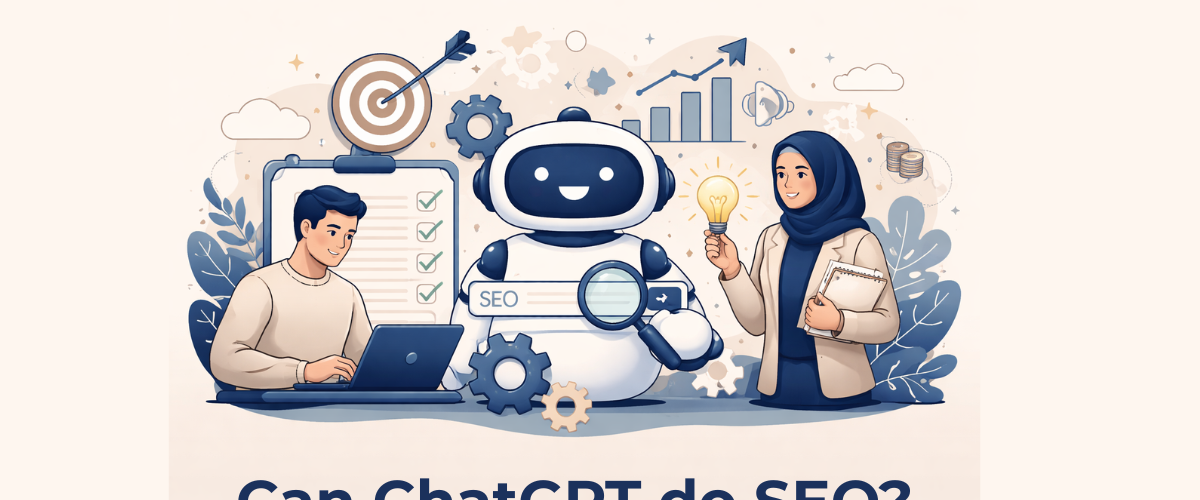
SEO, short for Search Engine Optimization, is basically the backbone of the digital world. If you are a social media person, you will want content that can give you a higher rank and can attract organic traffic; this is where SEO comes into action. With the rising popularity of AI, can ChatGPT help you in SEO?? So the answer is YESSSSS! But how?? So let’s explore:
Understanding ChatGPT’s Role in SEO
ChatGPT, aka our friend, is an advanced AI tool that is designed to generate human-like text, but with proper prompting. While it can’t directly make SEO highly ranked, it can help in many SEO related tasks such as:
- It can help in writing blog posts, ad copies, product descriptions, and social media captions.
- It can help in suggesting keyword ideas, long-tail variations, and related search phrases.
- Helping with meta descriptions, title tags, and basic on-page SEO tips.
- It helps with outlines, answering FAQs and overall readability.
Because of these features, ChatGPT can be stronger for marketers who want to speed up content creation without losing quality.
Key SEO Tasks ChatGPT Can Support
1. Keyword Research and Planning
While ChatGPT is not a live keyword database, it can:
- Generate keyword lists around a topic.
- Suggest related long-tail keywords for niche targeting.
- Provide content angles based on trending concepts.
💡 Tip: Always verify keyword volume and competitiveness using dedicated tools like Google Keyword Planner or Ahrefs before finalizing.
2. Content Ideation and Outlining
Brainstorming fresh topics can be time-consuming. ChatGPT can:
- Produce blog topic ideas based on a seed keyword.
- Create outlines that naturally incorporate keywords.
- Suggest headings and subheadings for better on-page SEO.
This speeds up planning and ensures content stays user-focused.
3. Writing and Editing
ChatGPT can write first drafts for:
- Blogs and articles
- Product descriptions
- Social media captions and ad copy
It can also improve existing text by:
- Checking grammar and readability
- Suggesting keyword placement
- Adjusting tone for different audiences
4. Meta Tags and Descriptions
Search engines rely on meta titles and descriptions to display results. ChatGPT can generate:
- Click-worthy meta titles within character limits
- Concise meta descriptions containing target keywords
This saves time while ensuring consistent messaging.
What ChatGPT Cannot Do in SEO
Ok, so we came to know ChatGPT can do alot but it still has some drawbacks, and here are some tasks that it can’t perform and we need a human to do those:
- No Real-Time Data: It can’t fetch live keyword volumes, deep search trends, or competition analysis.
- No Technical SEO: Enhanced site speed, managing broken links, or creating sitemaps, it can’t perform that.
- No Direct Ranking Power: Content written by AI, we still need to fix its back-links, DA/PA, and technical health. Because it can’t own its own.
How to Use ChatGPT Effectively for SEO
To get to the point results, use ChatGPT along with SEO practices with the following steps:
- Start with Research: Use professional tools (SEMrush, Ahrefs, Moz) to identify high-value keywords.
- Feed Specific Prompts: Provide detailed instructions like:
“Write a 600-word blog about Instagram engagement tips, including the keyword: SMM strategy.”
The clearer, the more concise the prompt, the better the output. - Optimize Manually: Add internal links, check meta tags, and verify keyword density after AI drafting.
- Human Edit for Quality: To avoid plagiarism or AI-generated content, proofread it properly and ensure its originality.
- Track Performance: Check insights and adjust your content strategy accordingly.
Advantages of Using ChatGPT in SEO
Using ChatGPT in your SEO workflow, can give you several benefits:
- It helps in time saving as it generates outlines, drafts, ideas and many more things.
- You do not have to buy any other software for basic content creation. You can do it for free on ChatGPT.
- It can help you to create content for multiple platforms, like blogs, ads etc.
- You can get past writer’s blocks with new topic ideas.
These benefits can help social media managers who manage multiple accounts, providing faster content delivery and better engagement.
Best Practices to Avoid Common Mistakes
- Always Fact-Check: Sometimes, AI can give outdated or wrong information.
- Maintain Originality: To make sure of the uniqueness of your content use plagiarism checkers.
- Blend Human Insight: Always blend your own taste like personal expertise, case studies or real examples.
- Update Frequently: SEO is not static, so it is better for you to keep your AI-generated content updated.
Let’s conclude it:
So, can ChatGPT really help in SEO?
Technically, YES! But ChatGPT can’t really guarantee high rankings. Eventually, it is a powerful assistant for content creation, keyword research, and helps in on-page SEO optimization. You can be a good marketer when you know how to combine AI efficiency and human intelligence to gain a competitive edge in this fast and furious digital world, or search and social media.
A balanced SEO strategy works best when AI and human skills work together. ChatGPT can handle many creative tasks like generating ideas, drafting content, and helping in shaping meta details. Experienced marketers and SEO tools focus on in-depth research, technical optimization, and quality checks.
When ChatGPT is used this way, it acts as a booster for SEO efforts rather than a replacement.
i enjoy reading your articles, it is simply amazing, you are doing great work, do you post often? i will be checking you out again for your next post. you can check out webdesignagenturnürnberg.de the best webdesign agency in nuremberg Germany
i enjoy reading your articles, it is simply amazing, you are doing great work, do you post often? i will be checking you out again for your next post. you can check out webdesignagenturnürnberg.de the best webdesign agency in nuremberg Germany
Wishing you a happy day, every day!
hello world
hello world
每日AI工具导航
wish you best and best