


Question-Based Keyword Research

Boosted Build

Talking about driving traffic to your site—then create relevant, high-quality and aligned content that your traffic actually wants. Well mostly users are in search of guides, information or comprehensive guides. So leveraging insights about the user’s intent and using question-based keyword research can give you a broader view of your audience.
But how to effectively utilize these keywords and optimize your content according to these user’s intent.
Defining Questions-Based Keyword Research?
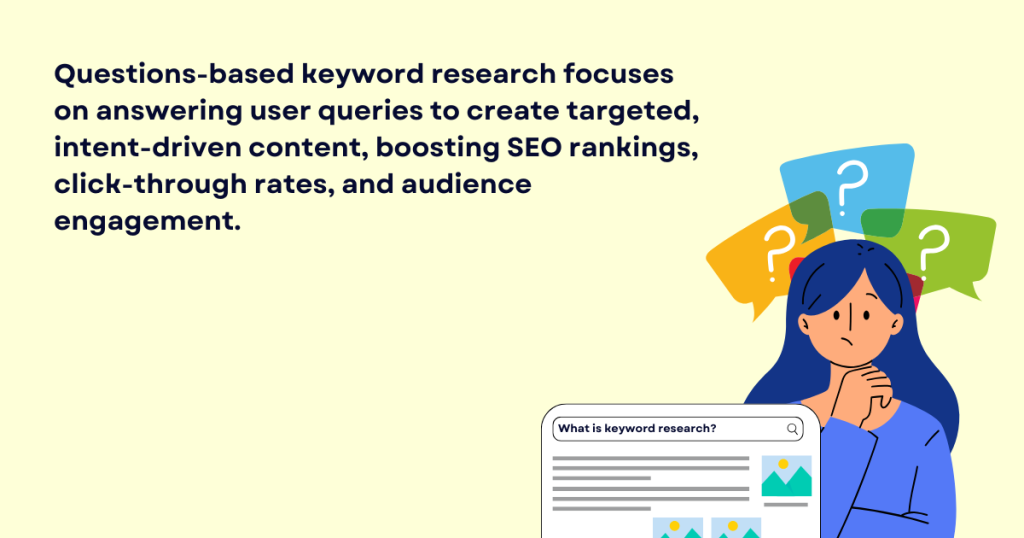
The fully proposed research that particularly revolved around defining and simplifying questions asked by users in search results is called question-based keyword research.
Let’s suppose you’re crafting a blog around the keyword “web design”, it’s better to write a blog around question-based keywords like “how do I choose the best website design for my business” or “what are the benefits of adaptive web design?”. These keywords help you to create content that aligns more with your audience interest.
Why Questions-Based Keyword Research is Critical?
1. Captures User Intent
Understanding the question behind the search is crucial. Questions reflect a clear intent—users are looking for answers to specific problems. By recognizing these questions, you can craft content that resonates with their concerns.
By this approach you can make your content more relevant and more likely your chances of ranking-higher will also improve. Search engines like Google are prioritizing content that satisfies user intent, making questions-based research a strategic asset.
2. Increases Click-Through Rates (CTR)
Content that directly answers a user’s question is more likely to appear in rich snippets and other high-visibility spots on the search engine results page (SERP).
This often leads to increased click-through rates (CTR) because your answer is placed right in front of the user. The CTR directly increases when users actually find the content they are searching for. The better you understand a user’s need, the more likely they will choose their content or other.
3. Long-Tail Keywords for Less Competition
The best advantage by focusing on questions is that these queries often come in the form of long-tail keywords. These keywords are typically less competitive and highly searched making it easier for content to rank.
How to Conduct Questions-Based Keyword Research?
Now that we understand the importance of question-based keyword research, let’s explore how to effectively approach and apply it:
1. Tools & Techniques to Get Common Questions
By entering a broad keyword like “web design” or “Google Ads,” these tools will display related questions, providing a wealth of ideas for content creation. Entering keywords like “web design” or “Marketing Ads” in these tools will provide you question-based data.
2. Analyze Search Intent
It’s crucial to differentiate between specific types of questions to keep search intent aligned with your content. For instance some questions are addressing a definition (e.g., what are semantic keywords?) while others are asking solutions to a problem (e.g., how to improve technical SEO?)
3. Leverage Google’s Autocomplete and Suggestions
In Google search bar, diaper cutie related to your industry and analyze those autocomplete suggestions. These suggestions are real time indicators of what people are mostly searching for. Likely at the bottom of the search result page you can get the “Search Related to” section, which can provide you more insights into your questions.
4. Look at Competitor Content
First start searching for question queries and analyze higher ranking pages according to it. Analyze their content and check if there’s a need to improve. Like what answers they are missing? Are there any related questions they haven’t mentioned? By finding these content gaps you can get an idea to position yourself higher.
5. Use Structured Data to Enhance Visibility
You’re identified your questions and already created the content piece now it’s time to add some schema markups or structured data to your pages. These schema markups assist search engines to understand the context of your content and more likely your content is being visible in rich snippets.
Examples of Questions-Based Keywords
Here are a few examples of how you can structure & craft your keywords around questions:
- “What is the optimal web design platform for businesses?”
- “How to create a Google Ads campaign for beginners?”
- “Why is website maintenance important for SEO?”
- “How can my site’s load time be improved?”
- “What’s the difference between responsive & adaptive web design?”
These question based keywords are specific & actionable that can be answered in various content forms like blogs creating guides or video tutorials. Answering these content types can help you to rank better and give increased engagement.
Conclusion: The Future of SEO is in User Questions
Lastly, Question-based keywords can help you to understand your audience better. This way you provide effective and more aligned content to your audience. Moreover your chances to rank higher can also increase. Aligning and utilising question-based keywords can improve user’s trust, enhance engagement & increase CTR.
The features—simplicity and relevancy which present in question-based keywords makes them more reliable and effective. The more precisely you are aligning and utilizing question base keywords there are more chances you can succeed in the long term.
So do answer the questions and stay aligned.