


Social Media ROI-Measure It Properly

Boosted Build

How to Measure the ROI of Your Social Media Campaigns: A Step-by-Step Guide
Today’s marketing environment relies on data. Therefore, measuring ROI for your social media campaigns is something that you must measure or else. Throwing content around and waiting for something good to happen is not the solution. There is a need for you to optimize your strategy by knowing the real effects of social media campaigns on your business, hence using funds wisely to meet various targets you have set as a marketer.
In this comprehensive guide, we will provide you with the necessary knowledge and tools that will enable you to measure your social media ROI effectively.
Step 1: Define Your Social Media Goals
It is important to define the social media goals before going into metrics – so what do you hope for out of your social networks activity? Here are a few popular ones:
Well-known brand:
Raise brand recognition and appeal to a broader target audience. Collated industry data: Generate qualified sales leads for your team.
Boost your website traffic and landing pages. Also, make sure you: Encourage interaction with content, likes, comments, etc.
Drive online sales and store visits/increase conversion rate (whichever is applicable to your business).
This way you can select relevant metrics that will help you monitor your progress as well as measure ROI.
Step 2: Identify Key Metrics to Track
Numerous social media metrics are in place however other social media metrics are insignificant. Here are some key metrics you need to consider depending on your objectives:
Brand Awareness:
Reach:
The figures are given by the number of unique individuals who have seen your content.
Impressions:
The total number of times your content was displayed.
Lead Generation:
Leads generated:
The number of leads acquired via your social media campaigns.
Cost per lead (CPL):
Estimate the expenses necessary for obtaining client data through social media.
Website Traffic:
Clicks:
The number of occasions that users have clicked a link in your social media posts.
Website traffic:
The sum total of folks who came to visit your website because of social media.
Engagement:
Likes, comments, and shares:
Determines the rate of viewership for your content.
Follower growth:
Tracks your increase in your social media following.
Sales and Conversions:
Conversion rate:
The percent of people that do a particular thing (for example: buy something) after they click on something on social media.
Sales generated:
The sum of all sales directly prompted by your activity on social media.
Step 3: Leverage Social Media Analytics Tools
Many social networking sites have their own statistical dashboards you can use to learn about how well your campaign is doing. Also, some social media marketing tools come with great analytical tools. These can help monitor what our chosen indicators show as well explain any trend signs in case they exist while also highlighting where one can up his game.
Step 4: Calculate Your Social Media ROI
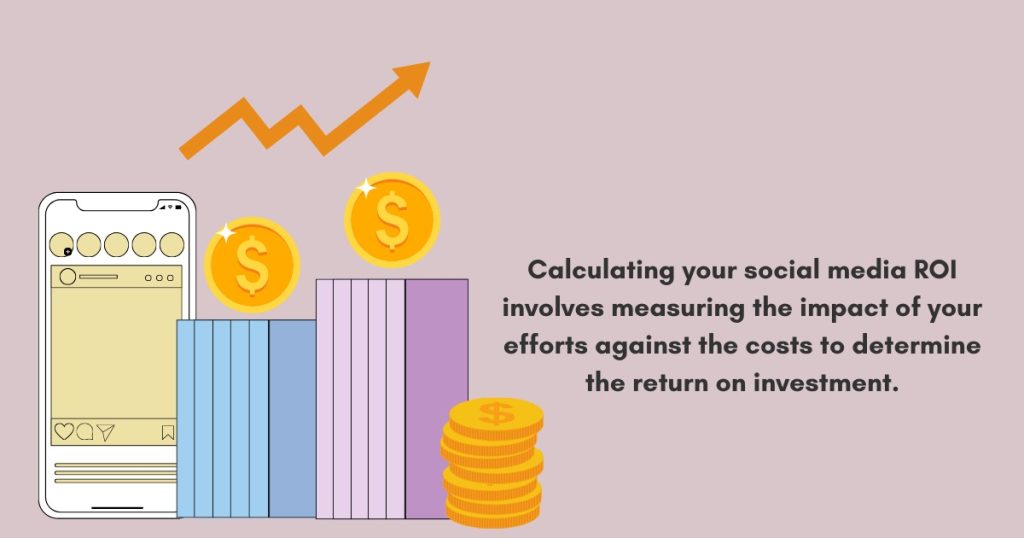
Once you know the key indicators and have followed them over a specific time period, the next thing to do is to calculate the ROI. Below is a simple formula to guide you:
ROI = (Monetary Benefit from Social Media) / (Cost of Social Media Investment)
Monetary Benefit:
This may apply to income accrued from social media leads, the firm’s main website, or sales made through direct contact with customers.
Cost of Investment:
This includes the price of social media advertising, staff member salaries directed to social media management, and all social media management tools that are used.
Advanced ROI Calculations:
Once your approach to social media becomes more advanced, you might want to include factors such as increased brand value, cost of influencer marketing plus customer lifetime value (of customers).
Step 5: Analyze, Refine, and Optimize
Continuous monitoring of income resource is an on-going process, so do ROI is. Moreover, keep checking your performance and interpreting statistics continuously. If something is doing well or badly known about it. Enhancing the social media strategy, the content should be optimised and targeting should be improved using this information whenever you are mistaken about the quest.
Conclusion
When you evaluate the return on investment on your social media, you are in a better position to make decisions based on records thus aligning your social media work with the universal marketing goals. In fact, they provide insights that can help you fully articulate the potential of your social media marketing. The results of your social media operations are important sources of information as this will help you to articulate the full potential of your social media marketing by applying these tips.
Additionally, In the space below where you leave comments, it would be possible for you to express your difficulties and setbacks. Avenues where other people are involved in promotions would be revealed to a marketer who sought support. Also, they will provide tips on how best to optimise their social media marketing campaign. Remember, working together is one of the ways to be successful. Hence, let us talk about this so that we can fully utilise social networks for advertising purposes.