


Influencers vs Creators in Marketing

Boosted Build
Influencers vs Creators: Key Differences in Marketing
This is the world of Digital PRs (link) and influencers and creators are the main actors, who either promote their business or someone else’s business by paid promotions.
In social media marketing these two terms are emerging rapidly to enhance conversions: Influencers and Creators! These terms may appear interchangeable but these play different roles in the perspective of the marketing landscape.
But some businesses feel confused to add which person in their marketing strategy! Well, in this blog we’re going to discuss key differences between Influencers and creators. What are the primary characteristics these terms play in marketing!
Who Are Influencers?
The individuals on social media, who’ve created a substantial following with a specific niche like beauty, fitness, travel or tech— Influencers! Their primary ability is that they can make their audience’s purchasing decisions by trust, authenticity and reputability. So many brands collaborate or send PRs to create their brand’s presence.
Key Characteristics of Influencers:
- Audience-Centric: The primary focus of influencers are their audience and their preference. They build connections, engagement and maintain a consistent dialogue with their audience.
- Social Proof: Their values arise from their ability to craft products or services in a way that feels personal to the audience. As the audience see influencers as relatable and credible they easily trust their suggestions.
- Collaborative Partnerships: Brands closely interact with influencers to market their campaigns, often integrating products smoothly into their existing content.
- Metrics That Matter: Brands analyze influencers’ growth and success by their insights like reach, impressions and engagement rate. The emphasis is often on their ability to amplify brand awareness and drive sales.
Who Are Creators?
The person whose expertise lies in crafting compelling, high-quality visuals, videos and writing scripts is called Creator! Regarding having a massive audience they prioritize creating art rather than audience interaction.
Key Characteristics of Creators:
- Content-Centric: The main skill of content creators is to craft design, production and storytelling. Their main focus is to create shareable, visually attracting and emotionally impactful content.
- Skill-Driven: Content creators bring specialized skills to the front like video editing, graphic design, photography or scriptwriting.
- Collaborative Assets: Sometimes creators are hired by brands to create marketing or promotional assets that can be shared across various channels, including social media.
- Metrics That Matter: The success metrics that matters more for a content creator lies in quality content, creativity and performance, rather than audience engagement metrics.
The Key Differences Between Influencers and Creators
While these two terms coincide with each other — an influencer can be a content creator and vice versa — the differentiation between them needs to be understand their purpose in the marketing domain:
| Aspect | Influencers | Creators |
| Focus | Audience relationships | Content creation |
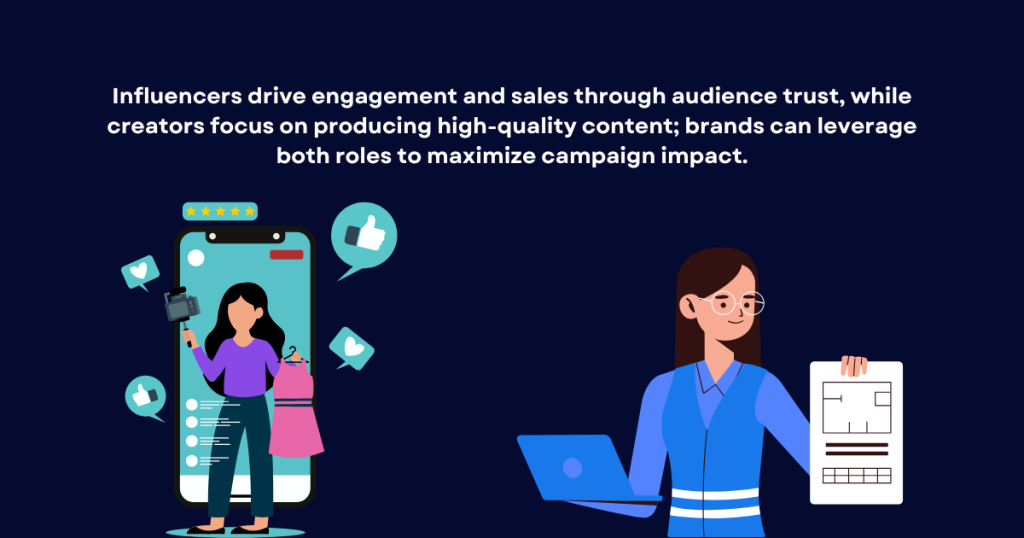
| Primary Role | Driving engagement and sales | Producing high-quality marketing content |
| Value to Brands | Social proof, trust-building | Creative assets for campaigns |
| Metrics | Engagement, reach, conversions | Quality, creativity, brand alignment |
Why the Distinction Matters in Marketing Strategies?
For brands, distinguishing between influencers and creators can refine campaign strategies and maximize ROI. Here’s how:
1. Choosing the Right Fit for Campaign Goals
- If the goal is to drive awareness or sales, influencers with a loyal audience and high engagement rates are ideal. Make sure that you appoint niche influencers.
- For campaigns that require standout visuals or innovative storytelling, creators bring the necessary expertise to produce content that captivates.
2. Cost Efficiency
- Influencers’ fees often include the cost of their reach and engagement, which can be expensive if their audience isn’t perfectly aligned with a brand.
- Creators typically charge for their content creation skills, offering brands reusable assets without necessarily bundling audience access.
3. Combining Forces
Many successful campaigns utilize a hybrid approach. For instance, creators produce content, and influencers distribute it to their followers. This synergy amplifies both reach and quality.
4. Adaptability Across Platforms
Creators’ content often performs well across multiple platforms, from Instagram and TikTok to websites and email campaigns. Meanwhile, influencers excel in platform-specific campaigns where their personal brand resonates most strongly with their audience.
Real-World Examples
Influencer in Action: A fitness influencer on Instagram promotes a new protein shake by sharing their personal experience, workout tips, and progress photos. Their audience engages by asking questions and purchasing the product through affiliate links.
Creator in Action: A videographer creates a polished, cinematic ad showcasing the same protein shake. The brand uses this ad across YouTube, social media, and their website.
Final Thoughts: Does It Matter?
Authentically saying—YES! IT MATTERS…. The difference between these two terms helps us to craft our business marketing strategy effectively as these are not just semantic; it shapes how brands can do PR branding, allocate resources, design strategies, and analyze success. Businesses can align their campaigns better with specific goals either it’s driving engagement, increasing sales or generating remarkable content by understanding these terms.
In today’s digital world, harnessing both can be the primary key to stand out, as the real magic happens when these roles complement each other like creating campaigns that are not only impactful but also making users trust your brand.