


JavaScript in Progressive Web Apps for 2025

Boosted Build

Progressive Web Apps (PWAs) are mostly used and trending web apps. These web apps are thriving in the website industry, which is being driven by Javascript. Javascript is the most leading language regarding PWAs. As it enables smooth and seamless offline functionality, offer real-time push notifications & an enhanced user experience.
Well, in this blog we’ll learn about how javascript is making a larger impact in the development of progressive web apps (PWAs). We’ll understand how Javascript enhances web apps interactivity & makes them a perfect option in digital web development.
Defining Progressive Web Apps (PWAs)?
The type of web applications that are mostly developed to provide native app-like vibe by using standard web technologies like HTML, CSS and mostly JavaScript—Progressive Web Apps (PWAs).
The future the feature of these apps to function smoothly on multiple browsers makes them more unique and different from native apps. These are mostly being developed and used due to its feature of working like native mobile app—without actually downloading it.
The Role of JavaScript in PWAs
Every time a developer needs JavaScript to create more dynamic and interactive web pages but in the context of PWAs using JavaScript becomes even more vital. Usually these web apps utilize JavaScript to deliver features that are being used mostly in native apps like offline functionality, push notifications and smooth navigation. Let’s break down the specific functionalities of JavaScript in PWAs:
1. Offline Functionality: Service Workers
The most significant benefit PWAs can provide is their ability to work offline (without internet). This can be done by the usage of Service Workers—A JavaScript API that helps PWAs to cache resources and handle network requests.
- Caching with Service Workers: The server the service worker intercepts network requests and can be used as cache content when users are offline and this makes sure that the app remains functional even without a stable internet connection.
- Background Sync: Data signing between apps and servers can be done in the background by using JavaScript. This makes sure that users continue to use apps offline and submit data once they are online.
- Improved Performance: With cache, multiple assets like images, graphics, stylesheets and other data or scripts are stored locally, causing minimum loading time & improving overall PWAs performance.
2. Push Notifications: Keeping Users Engaged
In order to keep the users engaged push notifications can be an effective way and JavaScript makes it possible. The feature of PWA which sends real time push notifications directly to users while they are not on the app is quite fascinating.
- Service Worker and Push API: Push notifications in PWAs can be implemented collectively using JavaScript with service worker API. JavaScript listens for events like incoming messages and triggers push notifications to notify users of new content, promotions, or updates.
- Customizable Notifications: The flexibility to customize and design notifications with images, buttons or even actions can be done by JavaScript which makes it more interactive.
- User Engagement: By sending real time and relevant notifications, businesses can enhance and drive user engagement and can improve retention rates. These all can be done by JavaScript.
3. Smooth Interactivity: JavaScript Frameworks and Libraries
PWAs along with JavaScript can offer smooth interactivity. To achieve a native app-like experience, PWAs need to include adaptable and responsive features. These features enable smooth transitions between different states.
- JavaScript Frameworks (React, Angular, Vue): react angular and VUE these frameworks are being used in PWAs to build interactive website design and dynamic user interfaces. These frameworks help web developers to create reusable elements that enhance web apps adaptability, responsiveness and interactivity.
- Single Page Application (SPA) Model: The development of SPAs can be done by JavaScript as it loads content dynamically without refreshing the entire page. This causes fast interactions and seamless transitions providing a more app-like experience.
- Dynamic Content Loading: The implementation of lazy loading for images, graphics and other data can also be done by JavaScript. This initially reduced the load time and improved the app’s performance.
4. Improved User Experience with JavaScript
The main feature of PWAs is providing exceptional user experience that align or exceed the quality of native mobile apps. JavaScript helps achieve this by enabling features like:
- Geolocation: The APIs of Javascript like Geolocation permits PWAs to access a user’s location—specifically useful for providing location-based services.
- Device Features Integration: Device features like camera access, vibrations, sound access or motion sensors can be implemented by Javascript. This can provide an even richer user experience.
- Customizable UIs: More interactive UIs can be created with Javascript that can be adjusted according to the user’s preference. This can offer a more personalized user experience.
Key Benefits of JavaScript in PWAs
The adaptability feature of JAvascript is the reason that it’s being used in PWAs. It can offers the following benefits:
- Cross-Platform Compatibility: PWAs are adjustable according to every screen size. This responsiveness can be added by javascript which ensures that these apps work smoothly on multiple platforms, allowing better accessibility.
- App-Like Experience: The offline functionality feature of Javascript offers an app-like experience. Moreover, it provides smooth animations and real-time notifications. Overall offer a compelling app-like vibe without actually downloading it from stores.
- Cost-Effectiveness: By using simple web technologies, you can create PWAs. This eliminates the need to build separate apps for different operating systems, reducing development and maintenance costs.
- SEO Benefits: Most search engines like Google can index and crawl these PWAs so it directly increases the chances of being visible.
Conclusion
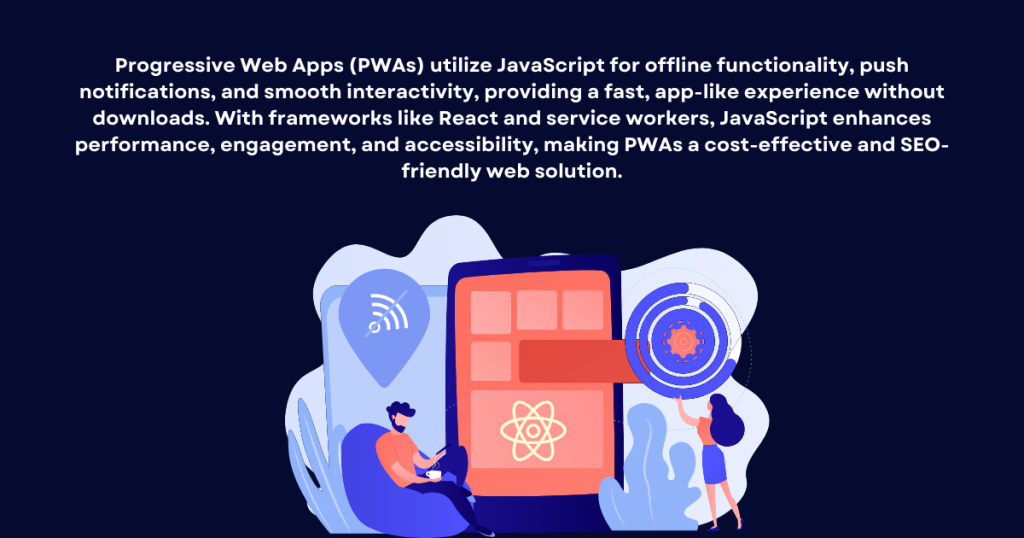
At last, Javascript is essential for a perfect Progressive Web Apps (PWAs), because it provides the features of offline functionality, reliability, real-time engagement or notifications with smooth interactivity.
This year, PWAs along with javascript are in more sights. Due to the increasing demand for fast, engaging, and sustainable web experiences, businesses and brands are shifting their focus. This change is also influencing related fields. As a result, it’s necessary for developers to prioritize Progressive Web Apps (PWAs). By understanding and leveraging JavaScript, PWAs are setting new boundaries for web applications that align with user needs and offer an app-like navigation.
So understand the power of PWAs with JavaScript and start implementing it to enhance your business.