


Sales vs Branding vs Marketing

Boosted Build
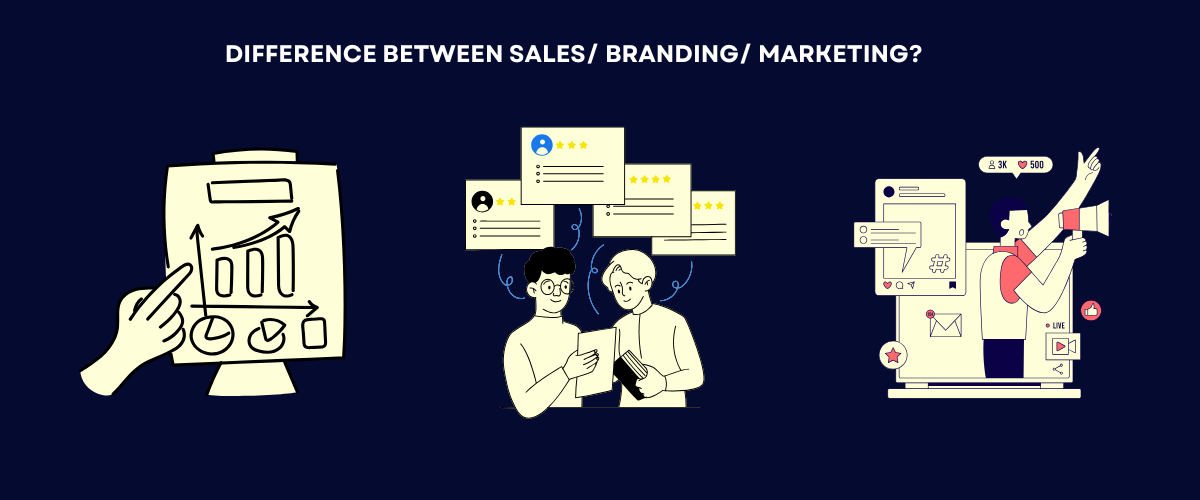
Sales vs Branding vs Marketing for Business Growth
The terms sales vs branding vs marketing in the business world are often used interchangeably. But each of them plays a different but successful role in driving business. The clear differentiation between these terms can improve business strategy. We should take insights of the differentiations between these terms as they are interlinked and can optimize your business efforts.
In this blog we are going to understand the difference between Sales vs Branding vs Marketing. This can result in clearing the confusion. What are the key differences between them and how you can strategize your business success rate. So let’s dive in!
What is Sales?
The direct interaction and engagement between a business and its target audience with the purpose of closing a deal is known as SALES. We can also say it as the process of converting leads into potential customers by offering products and services that might solve their problems. Sales also focuses on short-term goals and instant results, causing maximum revenue and generating more cash flow by better sales funnel analysis.
Key Characteristics of Sales:
- Goal-Oriented: More often, sales actions or sales objectives are goal-oriented by attaining immediate sales target and closing deals.
- Personalized Approach: Sales also involves one-to-one communication results in on the spot deals closed, as the representatives understand their audience needs and personalized it with the solutions their products are providing.
- Conversion Focused: By focusing more on their pain points and providing them value they can officially turn a lead into a paying client.
- Measurement: Sales are measured by the number of closed deals, revenue, and customer acquisition.
Sales often includes personalized selling, either it’s through face-to-face calls, phone calls or virtual platforms. Sales often happen when a user is ready to make a purchase decision. This is why sales are often considered as the last step of a buyer’s journey, happening after a customer has shown interest in your brand’s products.
What is Branding?
Secondly the process of creating a strong, authentic and genuine presence online and to connect with your audience is called BRANDING! The way your business communicates and delivers its values, motives and perspectives to the market is the process of branding. A strong brand makes an emotional impact on customers and builds trustworthy relationships.
Branding is a continuous process that involves influencing how customers assume a company and its products. And when we talk about driving revenue we generally prefer sales and marketing but branding is about the big picture of how a company is being seen in the market.
Key Characteristics of Branding:
- Identity Creation: The main focus of a branding is to develop a unique identity either true storytelling logos, colours typography and the content that reflects your business image.
- Emotional Connection: A unique and successful branding makes an emotional impact that connects customers with the company causing trustability and loyalty.
- Consistency: Branding requires consistency in voice, imagery and content across all touchpoints to create a consistent experience.
- Long-Term Impact: While making a strategy for a brand, the main aim is to make the long-term impact as branding is more about establishing a trustable reputation that aligns with customers over time.
A unique and effective branding strategy makes businesses able to differentiate themselves in our competitive marketplace. For example companies like Apple, Coca-Cola or Nike—each brand is more than just a product it provides experience that builds an emotional level connection with their customers, transforming their decisions and loyalty.
What is Marketing?
The process that focuses on all activities that a company undertakes to promote its product or services and to create brand awareness is called MARKETING! Marketing execution includes a technical approach to recognize, entice and to engage their targeted audience. Various tactics such as content marketing, social media campaigns, SEO, email marketing and advertising are and much more included in marketing.
But a trending marketing tactic called Meme Marketing, that’s successfully implemented by “Crumble Pakistan“. A cookie brand successfully growing via their meme videos and meme posts. This brand starts their business engagement by relatable memes of specific time and trends.
Key Characteristics of Marketing:
- Strategy Driven: To create a comprehensive plan to reach your potential customers is all involved in marketing it also includes analysing your target audience and the platforms you are going to share content on.
- Lead Generation: The main purpose of marketing is to attract and nurture leads, guiding them towards the sale process.
- Awareness and Engagement: It also includes building awareness through multiple channels and to engage customers with their valuable content.
- Channel Diversity: A wide range of activities and channels includes and marketing such as digital ads, events or even collaborations.
How Sales, Branding, and Marketing Work Together?
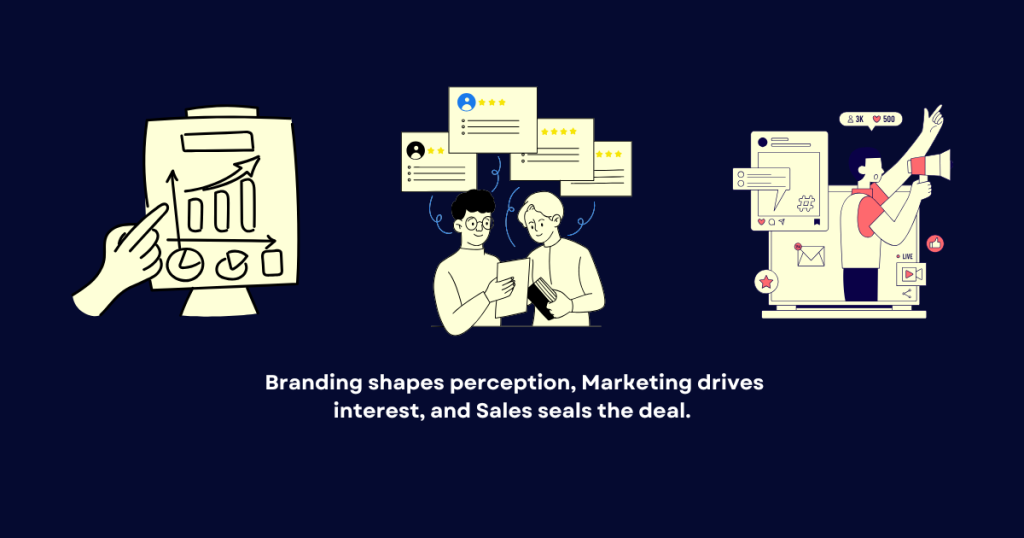
These terms sales, branding and marketing are different functions but in order to build a successful brand you have to implement together and you can see below how they fit together:
- Branding Sets the Foundation: The base of every brand present in branding as it shapes how your audience feels about your company and builds trust. Your marketing efforts may find it difficult to resonate with potential customers without having a strong brand presence.
- Marketing Drives Awareness and Interest: The gap present between branding and sales is filled up by marketing. As it attracts potential customers and makes them able to take decision making actions.
- Sales Convert Leads to Revenue: Your brand is now successfully buried. This is the time for entering the sales game. The purpose of the sales team is to handle objectives, tailoring the experience and providing a final push to secure a transaction.
The Key Differences Summarized
| Aspect | Sales | Branding | Marketing |
| Focus | Closing deals and generating revenue | Creating identity and emotional connection | Attracting and nurturing leads |
| Timeframe | Short-term (immediate results) | Long-term (building reputation) | Medium-to-long-term (building demand) |
| Goal | Converting prospects into customers | Establishing a unique market position | Generating interest and awareness |
| Activities | Personal selling, negotiations | Logo design, brand messaging, customer experience | Content marketing, advertising, social media |
| Measurement | Number of deals closed, revenue | Brand perception, loyalty | Lead generation, engagement, ROI |
Conclusion:
In short, understanding the main differences between sales branding and marketing is necessary for business success. The sales directly provide revenue, while branding builds long-lasting relationships. And at the end marketing make sure that you are delivering your content to your targeted audience at the right time.
When these factors resonate, your brand can create a strong, compelling presence, entice prospective customers and convert them into loyal paying clients. You can achieve both short-term and long-term results to generate maximum revenue by just implementing these functions smoothly.
Your blog is a true hidden gem on the internet. Your thoughtful analysis and engaging writing style set you apart from the crowd. Keep up the excellent work!
Get E-commerce News from E-commerce Pakistan. Learn more about e-commerce latest trends, and updates in Karachi and all over Pakistan.